Mastering Your Craft: Essential Woodworking Tools and Their Uses for Every DIY Project
Have you ever walked past a beautifully crafted wooden chair or table and wondered how it was made? Woodworking might seem like a complex craft, but with the right tools and a little practice, anyone can start creating fantastic projects right at home.
Woodworking is more than just a hobby; it’s an art that has been perfected over centuries. Whether you’re looking to repair a door, make a birdhouse, or even craft furniture, understanding the essential tools and how to use them can make all the difference. Here, we dive into some of the must-have tools for any DIY woodworking project and explain how to use each one.
Basic Woodworking Tools for Beginners
- Hammer: Every woodworker needs a reliable hammer. It’s primarily used to drive nails, fit parts, and break up objects. A good hammer should feel comfortable in your hand, not too heavy but sturdy enough to do the job.
- Tape Measure: When it comes to woodworking, accurate measurements are key. Whether you’re cutting wood to build a shelf or measuring space where a piece will fit, a tape measure is an indispensable tool.
- Saw: There are many types of saws, but as a beginner, you might start with two: the hand saw and the circular saw. The hand saw is used for basic cutting tasks, while the circular saw is good for straight, precise cuts across larger pieces of wood.
- Screwdriver: This tool is used for driving screws into wood. A set with various sizes and head styles (like flathead and Phillips) will be particularly useful.
- Level: A level ensures your project parts are perfectly horizontal or vertical. This is crucial when hanging cabinets, frames, or anytime you need to check the alignment of your project.
- Workbench: A sturdy workbench is the foundation of any woodworking project. It provides a stable surface to work on and can often include a vise to hold your work in place.
More Advanced Tools Once You’ve Grasped the Basics
- Power Drill: As you advance, a power drill will save you time and effort. It’s used for making holes and can be fitted with various drill bits based on the size and type of hole you need.
- Router: This tool is fantastic for adding detailed edges or hollowing out areas of wood. It’s perfect for making decorative designs in your projects.
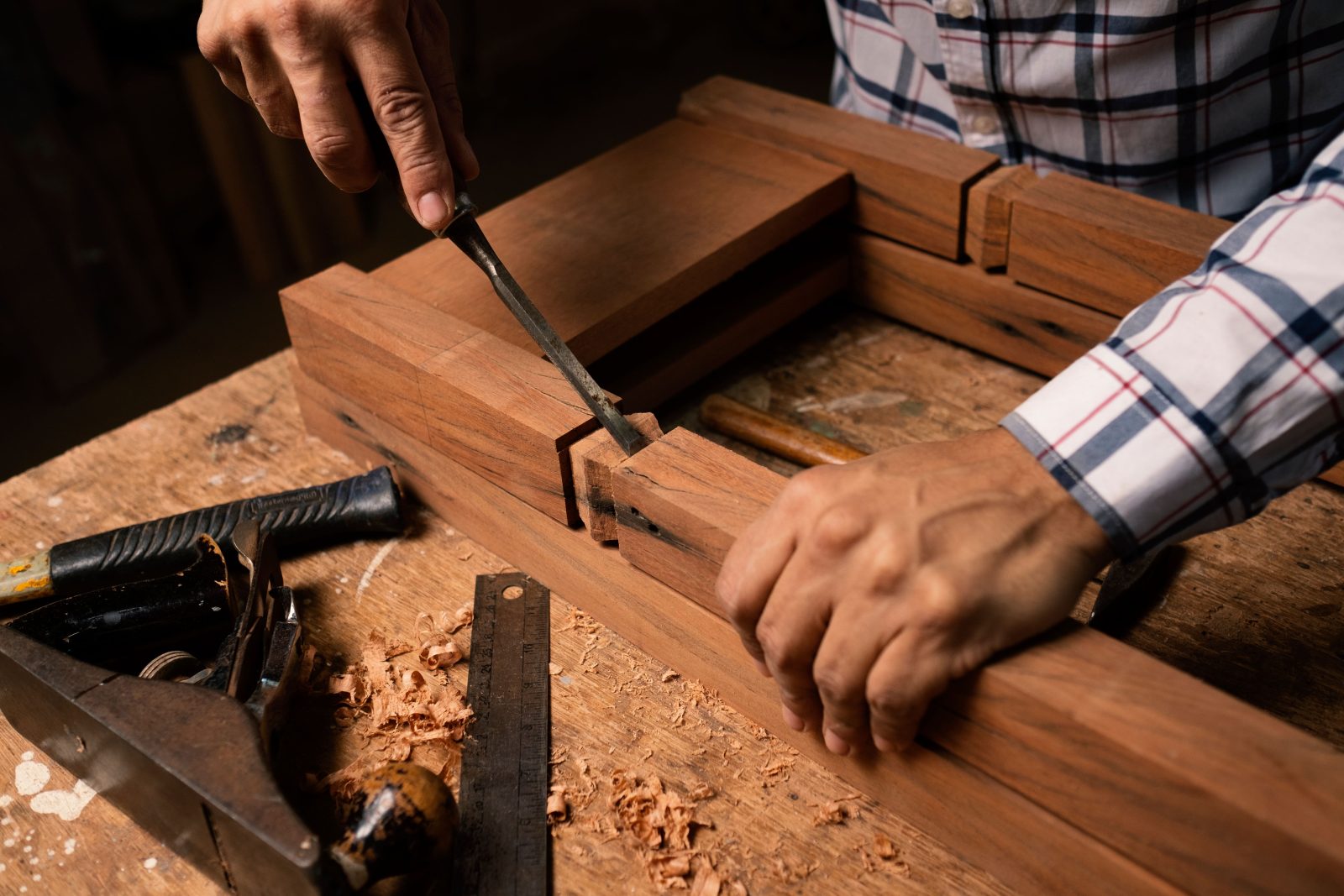
- Chisels: Used for fine shaping, chisels cut and carve wood with precision. They must be kept sharp and handled carefully.
- Sander: A sander smooths out wood surfaces before finishing. It can substantially ease the job of manually sanding with sandpaper.
Safety First!
Before mastering your craft, prioritizing your safety is essential. Always wear protective gear like goggles, ear protection (especially with power tools), and a dust mask to prevent inhaling wood particles.
Mastering Your Craft: Essential Woodworking Tools and Their Uses for Every DIY Project – FAQs
Q1: What is the best woodworking tool for beginners?
A1: A hammer, a saw, and a tape measure are great starting tools. They are relatively simple to use and essential for basic woodworking jobs.
Q2: How do I maintain my woodworking tools?
A2: Keep them clean and dry to prevent rust. Sharpen blades and bits regularly, and store tools in a dry, organized space.
Q3: Can kids participate in woodworking?
A3: Absolutely! With proper supervision and tasks appropriate for their age, woodworking can be a wonderful activity for kids. It teaches them creativity and practical skills.
Conclusion
Starting with woodworking can be exciting and a bit daunting, but equipping yourself with the right understanding and basic tools is vital. Each tool serves a different purpose and mastering how to use them effectively will enhance your ability to tackle various projects. Remember, every master was once a beginner. With patience and practice, you can enjoy the crafting journey and make your woodworking projects a real hit!